January: A Handwritten Font for Timeless Design
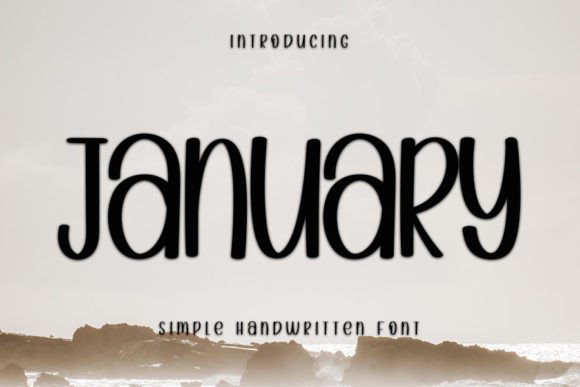
There’s a certain magic in a font that feels both personal and polished. It’s the kind of typeface that doesn’t just sit on a page—it communicates. It tells a story of craftsmanship and care. That’s the essence of the January typeface, a beautiful handwritten font designed to bring an elegant, human touch to your creative work. It’s more than just letters; it’s a distinct and timeless style that can transform a simple project into something truly spectacular.
Understanding the Visual Appeal of This Handwritten Typeface
At its core, January is a script font that captures the fluidity and warmth of authentic handwriting. Unlike rigid, mechanical typefaces, its letterforms have a gentle, organic flow. You’ll notice subtle variations in stroke weight and a natural baseline that mimics the way a hand moves across paper. This isn’t a casual, messy scrawl; it’s a refined, elegant script. The character set often includes beautiful ligatures and swashes, allowing for seamless connections between letters that give your text a cohesive, professional look. This makes it a standout display font, perfect for headlines, logos, and any text where you want to make a strong visual impact.
The beauty of a font like January lies in its versatility within the handwritten category. It bridges the gap between a playful script and a sophisticated serif font. It carries the approachability of a human-made mark but with the clarity and intentionality of a well-designed typeface. This balance is what makes it so effective for both digital and print applications. It doesn’t sacrifice readability for style, a crucial consideration for any designer or business owner.
Practical Applications Across Your Creative Projects
So, where does a premium font like January truly shine? Its applications are vast, limited only by your imagination. Think about the projects where personality and authenticity are key.
- Brand Identity & Logo Design: A logo is the cornerstone of a brand. Using January can instantly give a business—whether it’s a boutique bakery, a wedding photographer, or a lifestyle blog—a warm, approachable, and elegant identity. It helps build immediate brand recognition by setting a specific, memorable tone.
- Packaging Design: On a product label or box, this handwritten font can convey artisanal quality and care. It makes a product feel handmade and special, connecting with consumers on a more personal level than a standard sans serif font.
- Social Media Graphics: In the fast-scrolling world of Instagram or Pinterest, a captivating script font can stop the scroll. Use it for quote graphics, sale announcements, or story headers to add a layer of visual interest and sophistication to your feed, boosting audience engagement.
- Print Materials & Invitations: From wedding stationery to event posters, January adds a touch of class. It’s perfect for creating elegant invitations, stylish business cards, or eye-catching flyers that need to stand out from the crowd.
- Digital Products & Web Design: For bloggers and online entrepreneurs, this font can be used in website headers, email templates, or as part of a digital product design, like an e-book cover or a planner. It helps create a cohesive and professional presentation across all digital assets.
Enhancing Visual Consistency and Professional Presentation
One of the most significant challenges in design is maintaining visual consistency. A well-chosen typeface acts as an anchor for your entire brand identity. By consistently using a font like January across your website, social media, and print materials, you create a unified look that strengthens brand recognition. Your audience begins to associate that specific visual style with your business, making your communications instantly identifiable.
This font also plays a vital role in readability and professional presentation. While it’s a display font, its careful design ensures that words remain legible at appropriate sizes. This is critical for conveying your message clearly, whether it’s on a poster from a distance or on a website headline. A professional presentation isn’t about using the most complex elements; it’s about choosing the right tools for the job. A high-quality, commercial font is a fundamental design asset that signals professionalism and attention to detail.
Smart Strategies for Font Pairing and Implementation
Using a strong script or handwritten font effectively often involves pairing it with another typeface. January, with its elegant flair, works beautifully alongside cleaner fonts. A classic pairing strategy is to combine it with a simple sans serif font for body text. This creates a pleasing contrast that guides the reader’s eye—the handwritten font captures attention for headlines, while the sans serif ensures comfortable reading for longer paragraphs.
Before finalizing your design, always test your font pairings. View them at different sizes and on various backgrounds. Consider the context: a font pairing for a wedding website will differ from one for a marketing brochure. Review the full character set of the font you choose. Does it include the numerals, punctuation, and special characters you need? For any project that will generate revenue, from a client logo to merchandise, confirming you have the proper commercial licensing is a non-negotiable step. This protects you legally and ensures you’re respecting the work of the type designer.
Ultimately, choosing a typeface like January is about more than aesthetics. It’s a strategic decision that influences how your audience perceives your work. It’s about matching typography to your project’s goals—whether that’s to feel luxurious, friendly, creative, or trustworthy. By leveraging its timeless style and distinct personality, you’re not just decorating text; you’re building a visual language that communicates, connects, and endures.