Darksite: Capturing the Raw Energy of Street Art
Every city has a voice, a raw, unfiltered energy that speaks through its textures and its art. You see it on the sides of brick buildings, under bridges, and on the weathered surfaces of forgotten structures. It’s a visual language born from the streets, one that feels immediate, authentic, and full of character. For a long time, capturing that specific, gritty aesthetic in digital design was a challenge. You could use a standard bold font, but it often lacked the soul, the imperfect edges, and the dynamic flow that defines true graffiti. This is the gap that a specialized tool like the Darksite display font was created to fill, offering a direct line to that urban visual language.
A Typeface Forged in the Urban Landscape
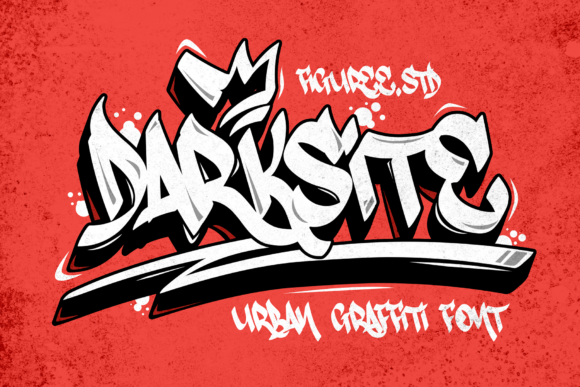
At its core, Darksite is a premium font that draws its inspiration directly from the bold, stylized lettering of street art and graffiti tags. It’s not just a display font; it’s a mood, an attitude. The letterforms carry a sense of movement and weight, with sharp angles and confident strokes that mimic the work of a spray can. This makes it an incredibly potent creative font for projects that need to convey energy, rebellion, authenticity, or a contemporary, edgy vibe. The design prioritizes impact over subtlety, making it a perfect candidate for headlines, logos, and any application where you need to grab attention immediately.
What makes a font like this visually appealing is its inherent imperfection. Unlike a clean, geometric sans serif font or a traditional serif font, Darksite embraces the organic qualities of its inspiration. You might notice slight variations in line thickness or terminals that don’t conform to strict, mathematical precision. These details are its strength. They give the typography a human, hand-crafted feel that resonates with audiences tired of overly polished, corporate aesthetics. It feels real, which is a powerful asset in brand identity and visual communication.
Practical Applications: From Branding to Merchandise
The true test of any design asset is its versatility. A font can be beautiful, but if it only works in one very specific context, its value is limited. Darksite, however, proves to be a surprisingly flexible tool across a wide range of creative and commercial projects. Its bold nature makes it ideal for any situation where the text needs to function as a central graphic element.
Consider logo design for a brand targeting a youthful, urban demographic. A skate shop, a streetwear label, an independent music festival, or a podcast about counterculture could all use Darksite to build a logo that feels instantly connected to its community. The font does a lot of the heavy lifting, establishing the brand’s personality before a single word of copy is read. Similarly, in packaging design, it can make a product pop on a crowded shelf. Think of a craft hot sauce, an energy drink, or a line of artisanal snacks. Using this font for the product name can communicate bold flavor and a rebellious spirit.
Beyond the core brand, Darksite shines in creating cohesive marketing assets. For social media graphics, it’s perfect for event announcements, sale promotions, or quote cards that need to stop the scroll. Its high-contrast, impactful style ensures legibility even on small mobile screens. For print materials like posters, flyers, and bulletin boards, it commands attention and sets a powerful tone. It’s equally effective for merchandise—imagine the font on a t-shirt, a tote bag, or a sticker. It transforms a simple item into a statement piece.
Strategic Pairings and Readability in Practice
While a display font like Darksite is fantastic for headlines, using it for long paragraphs of body copy would be a mistake. Its strength is in short, impactful bursts. The key to using it effectively is thoughtful font pairing. The goal is to create a visual hierarchy where Darksite provides the punch, and a complementary font handles the supporting information with clarity.
A classic and effective strategy is to pair your bold display choice with a clean, neutral sans serif font. A typeface like Montserrat, Open Sans, or Lato can provide a calm, readable counterpoint to Darksite’s energy. Use Darksite for the main headline, product name, or a key phrase, and then use the sans serif for subtitles, descriptions, and longer text blocks. This contrast ensures your design is both eye-catching and easy to consume. For a different feel, you could even pair it with a simple script font for a touch of hand-drawn elegance, though this requires careful testing to maintain legibility.
Always test your pairings in context. Place the headline and body text together at the size they’ll be viewed. Check the spacing between letters (kerning) and lines (leading) to ensure the text flows well. Consider the color contrast between the text and the background, as this is crucial for accessibility and readability. A dark font on a light background is generally safest, but Darksite’s bold strokes can sometimes hold up on textured or subtly patterned backgrounds where a thinner font might get lost.
Exploring the Styles and Understanding the License
When you invest in a commercial font like Darksite, it’s important to understand what you’re getting. Most premium typefaces come with more than one style. Look for variations like Regular, Bold, or even an Italic or Outline version. These additional styles give you more creative flexibility. The Outline style, for instance, could be perfect for a secondary design element or for creating a layered effect in editorial design or on a website.
Equally important is the licensing. Font licensing can sometimes be confusing, but it’s a critical part of professional design work. The license dictates how you can legally use the font. A standard license typically covers use in logos, on websites, and in print materials for a single entity (like your business or your client’s business). If you plan to use the font in a product for sale—like on a t-shirt or in a digital product template—you may need an extended license. Always read the license agreement provided by the font’s creator. This protects you legally and supports the independent designers who create these valuable tools for the creative community.
Ultimately, a typeface like Darksite is more than just a collection of letters. It’s a tool for storytelling. It allows designers, entrepreneurs, and creators to tap into a specific visual culture and communicate with an audience on a visceral level. By understanding its personality, pairing it thoughtfully, and using it strategically, you can harness its raw power to create designs that are not only seen but felt.