Runegrim: Unlocking Ancient Viking Power for Modern Design
There is a specific weight to history that you can almost feel when you look at ancient artifacts. It is the scratch of a chisel on stone, the ink on worn vellum, and the mystery of lost civilizations. For designers and creators today, capturing that authentic, gritty historical vibe without spending years studying archaeology can be a challenge. This is where the bridge between ancient script and modern utility becomes invaluable. If you have ever tried to find a font that looks like genuine Viking runes, you likely ran into a frustrating roadblock: most "runic" fonts are either illegible symbols, or they require complex Unicode conversion that breaks the moment you try to paste them into a standard design tool or social media caption.
Bridging the Gap Between Ancient Script and Modern Software
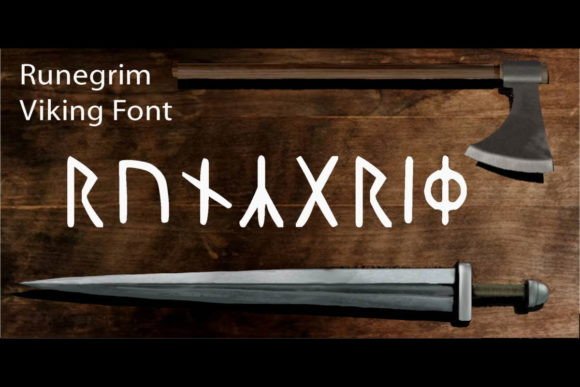
The primary appeal of a typeface like Runegrim is its accessibility. Traditionally, if you wanted to use the Elder Futhark or Younger Futhark alphabets, you couldn't just type on your keyboard. You had to use special character maps, which creates massive headaches for business owners and designers trying to edit text quickly. Runegrim solves this by mapping the aesthetic of the Viking rune script directly to standard Latin keys. This means you can type "Viking Shield Wall" on your keyboard and see it rendered in a stylized, ancient script immediately. It transforms a niche historical interest into a practical design asset.
Visually, this font style occupies a unique space. It isn't just a rough, jagged font; it carries the structural geometry of the runes—short vertical strokes and distinct angles—while ensuring the letterforms remain recognizable as the alphabet we use every day. It strikes a balance between the raw, hand-carved look of wood and stone and the legibility required for modern branding. It feels ancient, but it functions like a modern premium font.
Why the "Ancient" Look Works for Modern Branding
You might wonder why a style rooted in the 2nd century is relevant in a world of minimalist sans serif fonts and flat design. The answer lies in distinctiveness. We are currently seeing a massive shift in consumer behavior toward "authenticity." People are tired of sterile, corporate aesthetics. They want texture, story, and soul.
For small business owners, especially those in the handmade, artisan, or outdoor sectors, typography sets the tone before a customer reads a single word. If you are selling leather goods, hand-forged knives, beard oils, or heavy metal band merchandise, a standard serif font feels out of place. It feels too polite. A typeface inspired by rune script, however, communicates durability, craftsmanship, and tradition instantly. It tells your audience that your brand values strength and history.
Consider a coffee roaster trying to brand a "Dark Roast" blend. Using a soft, rounded script font might imply sweetness. Using Runegrim implies a bold, intense flavor profile that wakes you up like a cold morning in Scandinavia. This is the power of visual communication—the font does the marketing work for you before the customer even tastes the product.
Practical Applications: From Apparel to Packaging
The versatility of a display font like this is often underestimated. While it shines brightest on large headlines, it has specific applications where it outperforms standard typography.
Clothing and Apparel: This is the most natural home for runic styles. T-shirt designers know that the silhouette of the text is just as important as the image. Runegrim creates a distinct silhouette that stands out on fabric. It works exceptionally well for chest prints, back prints, and sleeve details. For streetwear brands or outdoor adventure gear, this typeface provides an "expedition" feel that resonates with customers who love the wilderness.
Packaging Design: If you are designing labels for craft beer, hot sauce, or specialty teas, the label needs to pop on a crowded shelf. Using a bold display typeface for the product name creates an anchor point for the eye. Because Runegrim is based on rune script, it pairs surprisingly well with organic textures like kraft paper, parchment, or wood grain backgrounds.
Social Media and Content Creation: In the fast-scrolling environment of Instagram or TikTok, you have milliseconds to grab attention. A bold, textured heading in a font like Runegrim stops the thumb. It breaks the visual monotony of standard web fonts. It is perfect for "Quote of the Day" graphics, announcement headers, or podcast cover art where you want to convey a sense of mystery or authority.
Mastering the Aesthetic: Pairing and Legibility
One of the most common mistakes with display fonts is overuse. Because Runegrim has such a strong personality, using it for a full paragraph of body text would make the content unreadable. The jagged, angular nature of rune-inspired letters is designed for impact, not for long-form reading.
The key to using this font effectively is font pairing. You need a "workhorse" font to handle the heavy lifting of your body copy. A clean sans serif or a simple serif font usually pairs best. The contrast between the ancient, complex display font and the clean, modern body text creates a hierarchy that guides the reader's eye. For example, you might use Runegrim for a headline like "The Saga Begins" and then use a font like Open Sans or Lora for the paragraph underneath explaining the product details.
When testing your pairings, pay close attention to x-height and weight. If the runic font is very thick and heavy, pair it with a lighter body font to avoid a "cluttered" look. If you are using it for a logo, ensure there is plenty of negative space around the letters so the intricate details of the letterforms don't bleed into other design elements.
Licensing and Commercial Viability
For entrepreneurs and designers, the practical side of font usage involves licensing. When looking for a creative font for commercial use, you must understand the terms. A "free for personal use" license means you can use it for your own projects, but the moment you put it on a t-shirt you sell, or a logo for a client, you are in violation of the license.
Runegrim is a commercial font, which means it is designed with professional use in mind. This usually includes a broader character set, better kerning (spacing between letters), and multiple file formats (like .OTF and .TTF) to ensure compatibility across different software, whether you are using Adobe Illustrator, Photoshop, Canva, or Procreate.
Always review the specific license details. Most premium font licenses cover physical end-products (like merchandise) and digital marketing materials, but they may have restrictions on embedding the font in apps or software. Ensuring you have the right license protects your business from legal headaches down the road and supports the type designers who create these intricate tools.
Final Thoughts on Visual Identity
Typography is the voice of your brand. Choosing a font is not just about what looks "cool"; it is about what fits the narrative you are trying to tell. If your brand narrative involves history, durability, strength, or a connection to nature, a typeface rooted in Viking rune script is a powerful tool in your arsenal.
By utilizing a font like Runegrim, you bypass the technical hurdles of Unicode and get straight to the design. You gain access to a visual language that has survived for centuries, adapted for the high-resolution screens and print requirements of today. Whether you are designing a logo for a new startup, laying out a poster for a local event, or creating a new line of graphic tees, this font offers a distinct voice that refuses to be ignored. It is about taking the raw power of the past and applying it to the creative challenges of the present.