Why the Lilac and Linen Font Feels Like a Warm Hug for Your Brand
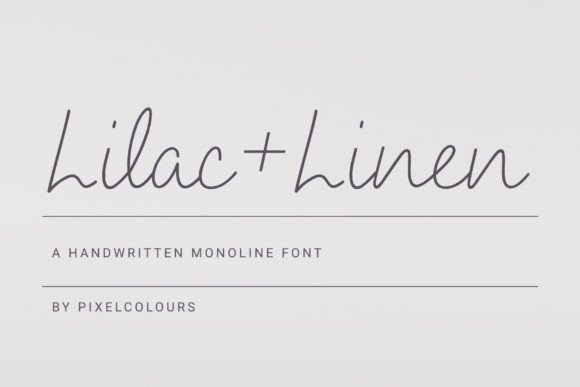
There's a certain comfort in handwritten notes—the kind where the ink flows effortlessly, each letter connecting to the next with a rhythm that feels deeply personal. That's exactly what the Lilac and Linen typeface captures. This chic handwritten monoline script font brings clean, flowing lines to your projects, blending the warmth of natural handwriting with the polish of professional design. With automatic ligatures and stylistic alternates built right in, it mimics the organic feel of pen on paper without sacrificing consistency. Whether you're labeling pantry jars, crafting social media quotes, or building a brand from scratch, this font offers something rare: authenticity that doesn't look amateur.
The Personality Behind the Script
What sets Lilac and Linen apart from other script fonts is its balance. It's not overly whimsical or aggressively modern. Instead, it sits in a sweet spot—approachable yet refined, relaxed but intentional. The monoline weight means every stroke maintains the same thickness, which gives it a clean, contemporary edge. This makes it surprisingly versatile. You won't find yourself wrestling with readability or wondering if the font will clash with your existing visual identity. The automatic ligatures kick in seamlessly, connecting certain letter pairs in ways that feel natural rather than forced, while the stylistic alternates let you swap out characters to add subtle variation. The result is text that looks hand-lettered but behaves like a well-engineered typeface.
This kind of personality is gold for anyone building a brand with a human touch. Think about small-batch candle makers, artisan bakers, boutique stationery shops, or lifestyle bloggers. These are brands where the story matters as much as the product, and typography plays a huge role in telling that story. A font like Lilac and Linen communicates care, creativity, and attention to detail—without a single word of copy.
Where This Font Truly Shines
Let's talk practical applications, because a font is only as good as the projects it elevates. Here's where this typeface really earns its place in your design toolkit:
- Product and Pantry Labels: If you sell homemade goods—jams, granola, bath products—handwritten labels instantly convey that small-batch, made-with-love feeling. This font delivers that look with the reliability of digital consistency.
- Logo Design: For brands that want to feel personal and approachable, a script font can anchor a logo beautifully. Pair Lilac and Linen with a simple sans serif for the tagline, and you've got a mark that feels both warm and professional.
- Social Media Graphics: Quotes, announcements, Instagram stories, Pinterest pins—these platforms reward visual personality. A handwritten font catches the eye in a sea of generic text overlays and helps your content feel more like a conversation than a broadcast.
- Packaging Design: Whether it's a box, a bag, or a sleeve, packaging is often the first physical touchpoint with a customer. Typography that feels handcrafted can elevate even the simplest design into something memorable.
- Invitations and Event Stationery: Wedding invitations, baby showers, birthday parties—these moments call for a personal touch. This font brings elegance without stuffiness, making it ideal for celebratory print materials.
- Website Headers and Blog Graphics: Used sparingly and at larger sizes, script fonts can add visual interest to digital layouts. Think hero sections, pull quotes, or section dividers that draw the reader's eye.
- Digital Products and Marketing Assets: E-books, worksheets, email headers, lead magnets—these benefit from typography that feels polished yet approachable. A font like this helps your digital products look like they belong on a design agency's portfolio, not a template dump.
Pairing, Readability, and Making It Work
Here's where practical advice matters. A beautiful script font can quickly become a liability if used carelessly. The golden rule with any handwritten or script typeface: use it for emphasis, not for body text. Long paragraphs set in script are exhausting to read. Instead, reserve Lilac and Linen for headlines, subheadings, short phrases, and callouts where its personality can breathe.
For body copy, pair it with a clean, highly readable typeface. A modern sans serif works beautifully—think something like Montserrat, Lato, or Open Sans. If your brand leans more classic or editorial, a light serif like Lora or Playfair Display can create a sophisticated contrast. The key is to let the script font do the emotional heavy lifting while its partner handles the information-heavy work.
Test your pairings at multiple sizes and on different screens. What looks gorgeous at 48 pixels on your laptop might turn into an unreadable tangle on a phone screen. Check how the ligatures and alternates render across devices, and make sure the text remains legible at smaller sizes. If you're using it for product labels, print a test batch before committing. Colors, paper texture, and print resolution all affect how a script font appears in the real world.
Also, take advantage of the stylistic alternates included with Lilac and Linen. These alternate characters let you customize the look of specific letters, which is especially useful if you're repeating a word or phrase and want to avoid visual monotony. Swap an alternate "s" or "e" and suddenly your design feels more organic, more like actual handwriting rather than a font on repeat.
Licensing, Formats, and the Business Side
If you're planning to use this font for commercial projects—and based on its design, many of you will—pay close attention to the licensing terms. Most premium fonts come with different license tiers depending on how you intend to use them. A desktop license might cover your printed materials and logos, but if you're embedding the font in a website, app, or digital product for distribution, you may need an extended or web license. Read the fine print. It's not the glamorous part of design work, but it protects you legally and supports the type designers who create these assets.
Check what file formats are included. OTF and TTF are standard for desktop use, while WOFF and WOFF2 are essential for web embedding. If the font package includes a web font kit, that's a strong sign the designer anticipated digital use cases, which adds real value for anyone building an online presence.
Building a Visual Identity That Feels Like You
Typography is one of the most underrated tools in brand building. The fonts you choose silently communicate your values, your audience, and your level of professionalism before anyone reads a single word. A handwritten script like Lilac and Linen tells people that your brand values warmth, creativity, and authenticity. It says you care about the details. It suggests a human being behind the business, not just a logo and a checkout page.
That said, no single font should carry your entire visual identity. Think of it as one voice in a chorus. Use it where it has the most impact—a hero headline, a product name, a signature sign-off—and let your supporting typefaces handle the rest. Build a small, intentional font palette: one script or display font for personality, one sans serif for clarity, and maybe a serif for editorial depth if your brand calls for it. This approach keeps your designs cohesive across platforms, from your website to your packaging to your Instagram feed.
The best brand identities feel effortless, but that effortlessness is always the result of deliberate choices. Choosing a font like Lilac and Linen isn't just about aesthetics—it's about deciding how you want people to feel when they encounter your work. And sometimes, that feeling is as simple and satisfying as a handwritten note from someone who genuinely cares.